
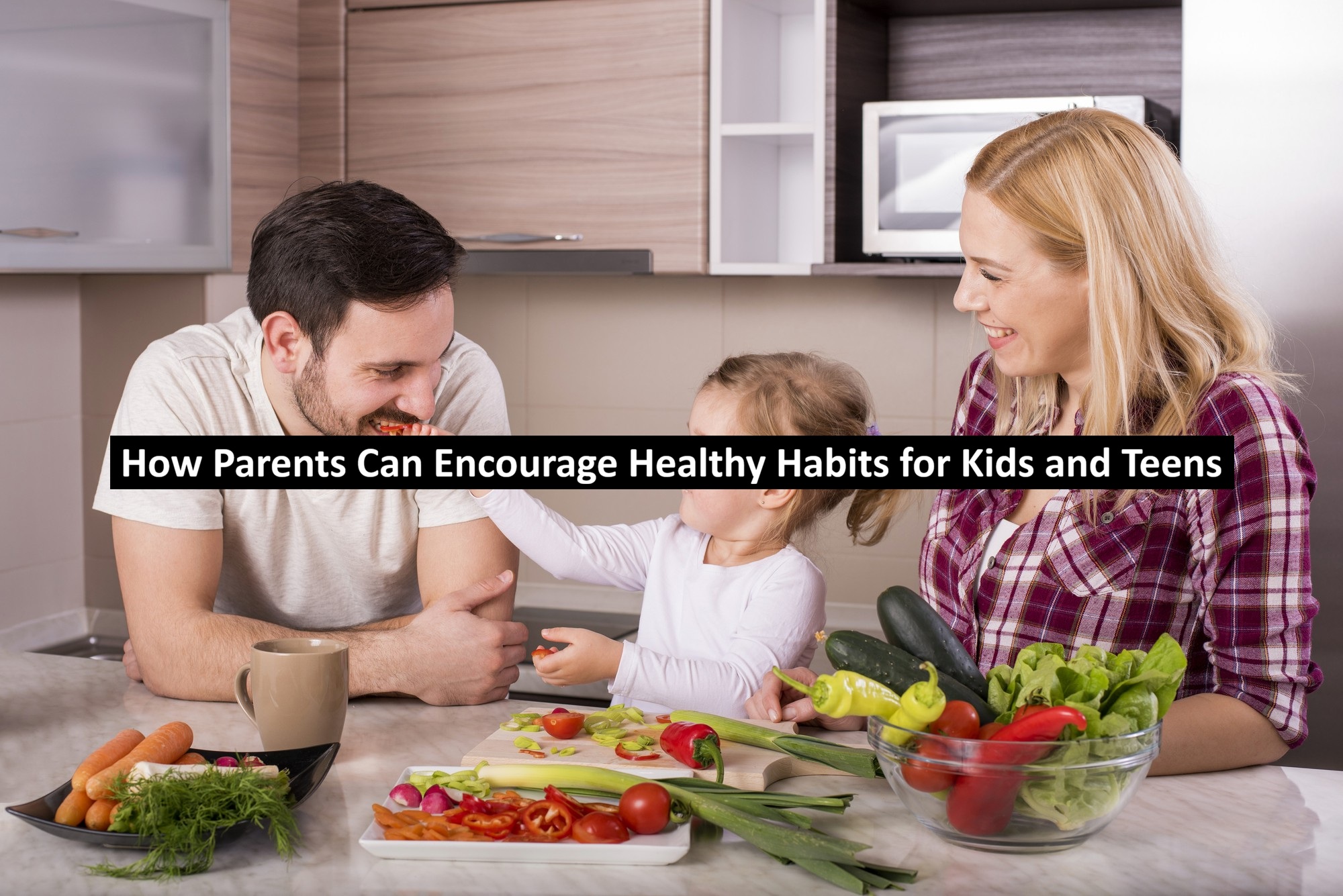
How Parents can Encourage Healthy Habits for Kids and Teens

Introduction
It is like a maze to walk in bringing up the child with healthy habits. The question arising before the parents is how it is possible to encourage balanced diet, physical activities beyond and emotional health at the same time. Youths and children are emulating the patterns around them and to a large extent their families. Thus, the intentional path finding could be developed throughout the entire life. Moreover, regarding the prevention of future trends concerning the style of life and establishment of confidence, the early health promotion can be applied.
Knowing About Healthy Habits of Kids and Teens
The other factors of a healthy lifestyle include nutrition and exercises. The patterns and life quality are vital, including the sleep and screen time and coping with stress, and that involves other people. Indicatively, teenagers that sleep will excel in school and sports. By the way, children who can assist the preparation of food in the family receive the education regarding the value of healthy food. Furthermore, time in front of a screen as opposed to outdoor time is conducive to mental and physical growth.
The parents are expected to realize that it is not possible to learn the habits within a single day. One should be consistent instead of being perfect. Parents model to enable the children to realize there is the need to put more attention on wellness. Indicatively, the children will be likely to emulate the behavior of their parents when they are exercising. Formation of a healthy environment, thus, facilitates the shaping of lessons which are so minuscule though, yet, impactful lessons on a daily basis.
Read: Affordable Backyard Fun Ideas for Families
Nutrition: Developing a Strong Foundation
Health, the long term and energy are subject to the food tastes. Nonetheless, they can hardly force children to eat some types of foods. Rather, parents are capable of bringing diversity and engaging children in the planning of meals. Indicatively, by letting children pick a new vegetable they will be curious as compared to reluctant. Besides, the common arrangement of meals will create the feeling of possession and the power over food.
It is necessary to exclude intake of sweetened drinks and junk foods, but it is necessary to make positive changes rather than to establish a set of rules, to which people have to adhere. The nutrition is not monotonous because it provides fruit smoothies, homemade snacks and innovative salads. In addition, one should compliment the kids who have eaten something new and this will motivate them to experiment. It is noteworthy that the balance has to be at moderation instead of guilt.
Physical Exercise: Sporting as a Living Style
Exercising is good in both the body and mind. Through their mobility, children are able to be more focused, temperamental and their endurance is provided. In addition to this, exercise also makes the bones and muscles stronger in the critical growth stages. A combination of captivated sports and mere walks of the family may be these activities. Here, as an example, weekend outings or even bike rides would be an exercise and good bonding time simultaneously.
Skill building activities together with fun activities may also be implemented by parents. A movement will be interesting when the exercises are simple such as timed obstacle courses. In the meantime, without screens, innovativeness and integration take place. It is necessary to mention that exercise is not conditioned by choice because the routines should be planned by an individual. Finally, it should not be forced to move even though it should be a natural movement.
Sleep: The Unsung Hero of Health
Immediate impacts of sleep are upon the immunity, mood and concentration. Sleep is a regular exercise that is performed on children and adolescents. My situation can be said to be an example of a pre-sleep ritual involving something calming as they can give the body an indication that it is time to relax. Moreover, at night restrictions of electronics promote the quality of the sleep. The parents are expected to be role models in the healthy sleep as they are supposed to follow foreseeable schedules.
Sleep also has the effect of influencing the level of appetite and energy. Lacking sleep, teenagers will be prone to being addicted to sweets and unreasonable. Thus, rest is good in the physical and emotional development being adequate. Otherwise, the creation of a relaxing and calm atmosphere in the bedroom contributes to the acquisition of full sleep. Regularity of bedtime is thus one of the contributions of resilience of daily activities.
Mental Health: Supporting Emotional Well-Being
The end justifies the means and just as much as you have the body of your child in circulation, it is also essential to have his/her mind working. Children enjoy freedom of free communication of emotions and coping mechanisms. They are able to discuss the bad school pressure or peer pressure as an example and to overcome the feelings. In addition, there is the promotion of trust by the process of feelings validation besides refuting them. Besides that, such mindfulness practices as deep breathing or journaling help to form emotional self-control skills.
The second approach that can be implemented to ensure that parents become resilient is by involving them in problem-solving as opposed to protecting them against the challenge. Responsibility, and patience are essentially based on what we can achieve as a foundation like organizing a school project. More so, family meals or storytelling are a few activities in the family that help to promote togetherness. One can observe that all forms of healthy emotional practice would decrease the degree of depression and stress in the future. The final outcome is that children become acquainted with the way on how to deal with life.
Limiting Screen Time Without Conflict
The contemporary childhood is screen-dominated and the equilibrium can be established. Limitation of the boundaries will ensure that the kids are made to understand that there is an endpoint without being punished. One such instance is a day to day routine that has homework, chores and free time, where the screen feels like a reward. Furthermore, the involvement of children in offline activities such as art, reading, or sports distracts children by default.
The parents should be incorporated in the choices made concerning the digital. The moderation is imitated through watching the shows collectively or through playing games. Meanwhile, it would be desirable to set the tech-free zones to encourage face-to-face communication. It is important to note that uniformity is greater compared to rigidity. Thus it is possible to make children develop self discipline and simultaneously maintain social connections with the children.
Family Involvement: Leading by Example
The parental behavior is reflected on children in comparison with the instructions. Consequently as a role model, the way is set to long term practices. Preparing food, playing, and interaction between family members can make them healthier and even better pertaining to relationships. When one is teaching healthy recipes, this parent is not just teaching them the actual skills but is also teaching them about nutrition. Moreover, minor parties will motivate one to continue playing.
Multiplicity in the family affairs, as it creates confusion in children. The siblings can support each other by engaging in shared activities and challenges. In addition, healthy behaviors are nice because of family traditions of biking on the weekend or gardening. Specifically, parents are meant to recognize their own weaknesses and be resolute.
Reward Systems: Stimulating Good Behavior
The rewards work when used in the most suitable manner. Even that is the mere cognizance like verbal praise that can override material gifts. The teens in one occasion should be commended when they do homework before they can be taken to screen as this will inculcate responsibility. Besides, small rewards will prevent people from developing habits at once, as opposed to satisfaction.
The parents should avoid their association with food as a reward in order to prevent bad associations. Instead, it is effective to use such privileges as more time to read or choose an activity during weekends. Meanwhile, the sense of clarity of the goals that are to be achieved and measured will help children track down the progress. Consequently, the positive reinforcement will be established on a frequent basis and will promote some form of self-confidence and independence.
Peer Influence: Guiding Social Choices
Habits are developed by friends when one is in adolescence. Parents can also freely tackle the relationship of peer pressure to provide the children with the ability to make decisions. One such example is the use of awareness creation whereby the creation process is through the discussion of the healthy choice of snacks during social gatherings. Besides, the peer groups may be made supportive by encouraging the club activities, sports, or volunteerism.
The intervention of the family helps the children to evaluate the influences of the peers critically. In addition, effective declines, assertiveness may be trained by means of role-playing. It is notable that affirmative socialization reduces risky behavior and increases identity. In this way interaction between peers facilitation can be achieved in an attempt to support emotional and physical well being.
Creating a Routine: Structure Without Rigidity
Routines are more fixed and as well promotes freedom. Routine regularly helps the children in predicting the food, sleep and activities without being limited. As an illustration, foreseeable mornings will minimize pressure and pandemonium in the morning. Meanwhile, any laxity in habits trains the elasticity and moderation.
Parental instructions are also easy because of the existence of organized habits. The aversion of conflicts is achieved through planning homework, exercise and chores. Moreover, children should be involved in the day-to-day development, which leads to the improvement of proprietorship and corporation. Notably, balance helps such that routines are not constraining. Accordingly, it is responsibility that has been taken in children, by default.
Encouraging Curiosity About Health
Children like to learn through experimentation. The behaviors will also only gain meaning because they will be taught about the significance of having habits. As an example, the explanation of the way that calcium makes bones strong causes one to be interested in milk or yogurt. When it comes to energy gain of exercise, the movement will be also motivated by the same. In addition, the application of light experiments, sleeping habits observation, etc., could be utilized to make the experience more entertaining.
The parents would also be in a position to relate the lessons with real life. The first hand experience on nutrition will be provided by going to a nearby farm or grocery store. Meanwhile, the alternatives such as involving teens in cooking or exercises will facilitate the decision making processes. It is interesting to note that the learning that is based on curiosity inculcates habitual learning at a deeper level as compared to the rules. Eventually long term commitment can be achieved by knowing.
Conclusion
Creativity, patience and consistency would be required in the promotion of a healthy lifestyle among the children and teenagers. Well-balanced nutrition, physical activities, and emotional assistance of the parents who demonstrate this by their own example are a rather effective background. The habits of sleep, screen time and peer counseling augment the daily structure. Above all, wellness is enjoyable when it goes family-based and also an outcome of learning that is based on curiosity.
In conclusion, the people who need guidance on how to balance the duties can also use professional help, thus, the balance of the duties can be given with the help of professional facilities, such as the assistance of the so-called write my nursing essay for me.