
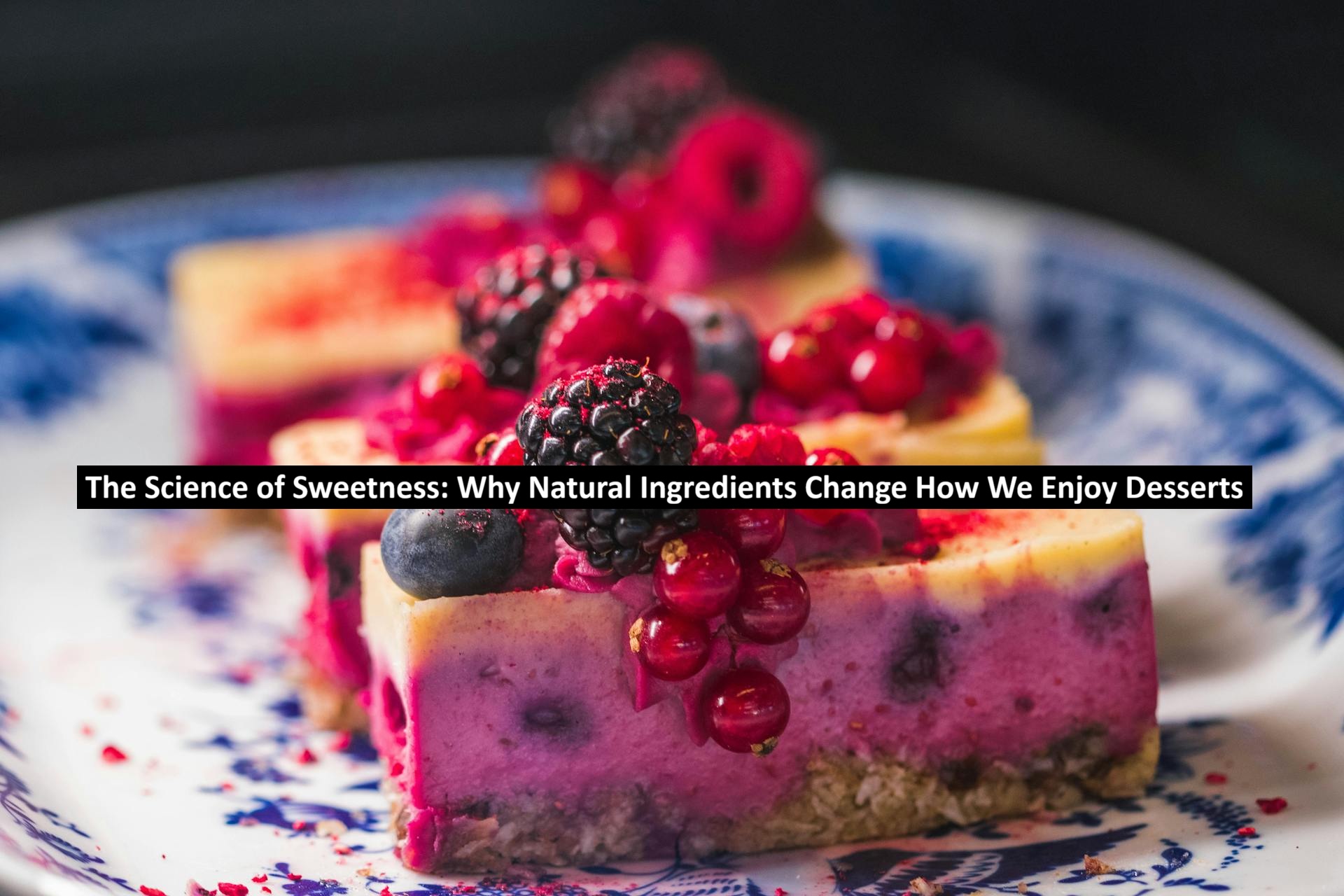
The Science of Sweetness: Why Natural Ingredients Change How We Enjoy Desserts

Summary: Our love for sweet things is about more than just sugar. Substituting processed sweetness with fruit as a source of natural sugars is a healthy choice. But more than that, it makes desserts taste more alive and authentic.
Everyone gets that instinctive craving for something sweet once in a while. After all, most of us have had our brains associate sweets with rewards ever since we had that first taste of something soft and sweet as a child.
Why We Love Sweet Things
It’s not entirely about those mental associations, though. Research shows receptors on our tongues send those “sweet” messages to the brain’s pleasure receptors.
That means our love of sweet things is a combination of biology and psychology.
But over time, too much refined sugar dulls that excitement. Want to wake those senses back up? Consider switching to natural sources of sweetness, like fruit.
Apart from being a healthier food choice, they enhance and expand on flavor rather than dampening it.
Read: The Latest Trends and Styles in Home Renovations
Sweetness Isn’t Simple
Sugar by itself is simple. When refined, it’s in its most basic form.
In contrast, fruit has more complexity. While it contains natural sugars, it also has acids, fibers, and aroma. These elements combine to create a sensory symphony.
And you’re not just imagining it. Studies show that even small molecular changes affect how sweet things taste. After all, why does a ripe peach or berry taste “softly” sweet, while refined sugar feels sharper, more aggressively sweet?
Natural sweetness has texture and story.
Real Versus Refined
As much as we’d like them to, refined and artificial sweeteners just don’t offer the same depth of taste and feeling as fresh or pureed fruit. Here’s a quick comparison:
| Quality | Refined or Artificial Sweeteners | Real Fruit or Fruit Puree |
| Glycemic Effect | ||
| Slower sugar release | ||
| Flavor Depth | Often flat, occasionally metallic | Full, tangy, layered |
| Satiety | Feels less satisfying | Feels more filling |
| Texture (when added to food and drinks) | Needs thickeners | Adds body and moisture |
| Nutrients and Fiber | Delivers calories with few, if any, nutrients | Keeps vitamins, color, fiber |
Boost Your Brain and Body with Natural Sugars
Processed sugar is addictive. The more you eat, the more you crave it. Meanwhile, cutting down on refined sugar helps your palate find balance again. But it goes beyond flavor.
Authentic Beats Artificial
Artificial sweeteners seem like a smart substitute for sugar. But while they can imitate it in sweetness, they can’t truly replicate it. Plus, when people read “sugar-free” on a label, they expect it to taste less sweet. The mind shapes the taste before your first bite.
For example, a dessert made with real blueberries or tropical Key limes doesn’t just taste sweet. It feels alive. The natural acids brighten the flavor, and the color alone will tell you it’s real.
Health Benefits of Sourcing Sugar from Fruits
Here’s what happens when you replace desserts and drinks that use refined sugar and artificial sweeteners with ones that use natural sugars from fruits:
- Natural sugars move through your bloodstream at a slower pace. This means your blood sugar is less prone to drastic spiking, offering better diabetes control for those who have it.
- Fruits contain water, fiber, vitamin C, and other nutrients, all of which offer a number of benefits.
- It improves your gut health and metabolism, curbing weight gain and obesity.
Molecular Composition and the Full Dessert Experience
Imagine you have two types of pudding. One’s sweetened with white sugar, and the other with mango puree. The latter tastes brighter and more refreshing, with better color and aroma, while the mango’s acidity balances the cream.
You notice these effects because of tiny molecules called esters and aldehydes. They connect taste and smell, so your brain interprets flavor as something more complex, enhancing your perception of sweetness.
Make Sweet Memories
We rarely remember how sweet something tastes. What we end up recalling instead is the smell of baked apples, the tartness of mangoes, and the mouthfeel of fresh berries paired with cream. Real fruit gives desserts that kind of depth.
Sugar alone makes things sweet, but doesn’t make for flavor you’ll remember. And worse, it can be detrimental to your memory and cognition in the long run.
How and Why You Should Go Natural
If you want to experiment, you don’t need to replace all your sugar at once. Try small swaps first and see what happens.
If You’re a Home Cook
Buying more fruit whenever you do the groceries is the first step. Besides fresh fruit, purees work wonders too.
A few simple ideas, and you can easily search for the recipes online:
- Apple puree for muffins and pancakes
- Banana puree for brownies or quick breads
- Mango, passion fruit, or lemon for tarts and curds
- Mixed berries for frozen desserts or fillings
Fruits and purees also make for great shakes, smoothies, ice creams, and popsicles.
If You’re a Chef or Business Owner
If you have a restaurant or cafe that serves desserts or pastries, switching to natural ingredients is just business smarts. It levels up the sophistication of your dishes’ flavor and serves as a great selling point. Don’t underestimate how many customers are looking to indulge more with less guilt.
If you’re a chef or a brewer, you likely already know how food balances art and science. That sense of creativity tempered with invention, experimentation, and then replication is the secret to success in the food and beverage industry.
The Sweet Truth About Retraining Your Palate
Natural ingredients make food healthier and more authentic.
Use them in desserts, and this course stops being a simple vehicle for sugar. Instead, it becomes a complex experience you’ll have trouble putting into words. Chocolate is darker, richer. Caramel sings arias on your tongue. Blueberry puree tastes sweeter than ever. You’ll find a renewed appreciation for flavor because moving away from refined sugar and artificial sweeteners isn’t about eating less joy. It’s about tasting more of it.